Hey guys! It’s Yanki here from Simply Anki. If you follow my blog, you already know that I am absolute obsessed with hunting down the best deals, sharing my haul unboxings, and tracking every major macys sale. Macy’s has been my go-to shopping playground for years, but let’s be real—if you’ve stepped into a store or browsed their site lately, you can feel that things are changing fast. According to a recent report from Marketplace.org this June 2026, Macy’s (NYSE: M) is right in the middle of a massive, company-wide comeback plan. Their CEO, Jay Benoit, recently made it clear that the next 12 to 18 months are going to be a critical make-or-break window for the retail giant. They are aggressively shutting down underperforming stores and heavily shifting their focus toward something I personally care about the most: luxury beauty. Honestly, it makes sense. Macy’s has been feeling the pinch lately. Their 2025 fiscal revenue slipped by about 3% while competitors like Target managed to grow by 6%. To counter this, they are leaning hard into high-end beauty and contemporary fashion, which has already grown from a mere 8% of their revenue in 2019 to roughly 15% here in 2026. As a shopper who regularly checks their beauty counters for Dior and NARS discounts, I’ve definitely noticed this shift. But will it be enough to save the department store experience?
🔑 The Core Takeaways: What’s Happening Right Now
Aggressive Store Closures: Macy’s plans to shut down around 100 underperforming stores in 2026. That is about 13.7% of their 730 locations across the US. They are completely abandoning weak locations to save cash.
The Beauty Engine: Beauty now makes up roughly 15% of total revenue. With juicy 45% gross margins, makeup and skincare have officially become Macy’s ultimate profit lifesaver.
The Loyalty Program Struggle: Their Shop Your Way ecosystem boasts over 100 million registered members, but fewer than 30% are actually active. Talk about a massive pool of ghost users.
Moving Upmarket: I’ve noticed way more accessible luxury brands filling the aisles. Their premium brand onboarding is up 22% year-over-year, driving average order values up by about 18%.
🔍 The Harsh Reality of the Department Store Industry
Look, traditional department stores are fighting for survival. Statista data shows that their US market share plummeted from a comfortable 38% in 2010 to less than 20% in 2024. By 2027, experts predict it will drop below 15%. E-commerce is booming (accounting for 25% of retail now), Gen Z and Millennials shop differently, and suburban malls are fading away. A McKinsey retail report pointed out that successful department store transformations always rely on three things: precise brand curation, strong private traffic, and a heavy tilt toward high-margin categories. Macy’s doubling down on beauty fits this perfectly, but their inactive member problem is a massive hurdle they need to clear.
📊 My Insider Insights: Beauty, Malls, and Zombie Members
Beauty is the Ultimate Lifesaver: In my experience, beauty products generate 2 to 3 times more sales per square foot than standard apparel. Plus, people still love trying on makeup in person, making it relatively immune to the “Amazon effect.” Sephora already proved this formula works.
The “Bigger Isn’t Better” Trap: Macy’s used to try to be everything to everyone, which just diluted their brand. Narrowing their focus to luxury beauty is the right move, but they have to execute it flawlessly without alienating budget-conscious shoppers.
The Loyalty App Ceiling: Having 100 million users sounds great on paper, but eMarketer data shows that retail apps usually only see a 12% to 15% monthly active user rate. Macy’s needs to give us better reasons to open that app.
Location Values are Being Rewritten: Closing massive suburban anchor stores and focusing on high-density urban flagship stores is the new industry standard. Data from Westfield shows that urban stores outperform suburban ones by 2.3 times.
💼 Business Impact Analysis: A Quick Breakdown
Dimension
Real-World Impact
Rating
Short-term Stock
Positive. Wall Street loves cost-cutting and store closures that trim the fat.
⭐⭐⭐⭐
Long-term Valuation
Neutral to Positive. Highly dependent on whether beauty growth can sustain its momentum.
⭐⭐⭐⭐
Competitive Landscape
Mixed. It eases pressure from traditional peers, but intensifies the battle with online giants like Amazon and Shein.
⭐⭐⭐
Job Market Impact
Negative. Closing 100 locations means roughly 12,000 retail jobs will disappear.
⭐⭐
🎯 The Hard Numbers to Track
100 Stores: The number of retail locations slated to disappear through the rest of this year.
$6 Billion: Macy’s total revenue scale for the 2025 fiscal year—down roughly 25% from its historical peak.
~$22 Billion: The total shrinking size of the US department store retail market, which has contracted about 30% since 2020.
📈 Where Do We Go From Here? My Future Forecast
Short-Term (Next 6-12 Months): Expect their financial reports to look a bit messy. Severance and lease breakages will likely cost $50 million to $80 million per quarter in one-time fees. However, if their beauty department can maintain a solid 20% year-over-year growth rate, the stock price should find a healthy floor. Medium-Term (1-2 Years): This is the true crunch time. If they can’t successfully engage those inactive Shop Your Way members and get that active rate past 25%, simply closing stores won’t create a sustainable growth curve. I’ll be keeping a close eye on whether they announce smart integrations with platforms like Amazon or LTK. Long-Term (3+ Years): I personally see Macy’s evolving into a smaller, much more boutique-style curated retailer—very similar to the path Nordstrom took. However, with a heavy historical baggage of around $3 billion in debt, their capital flexibility is tight, so completely cloning the Nordstrom model will be an uphill battle.
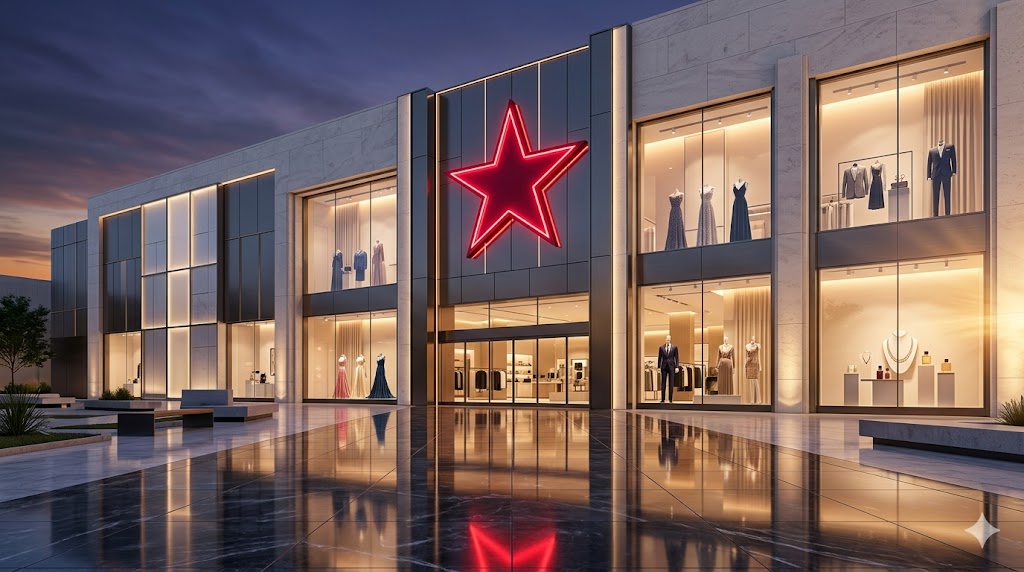
Image Source: Retail Industry Insights Archive / Photo for illustrative purposes
🌐 How to Use This Information
If you are an investor tracking consumer stocks, a retail professional, or just a hardcore retail strategy nerd like me, you need to look past the surface headlines. Don’t just look at whether a store near you is closing. Instead, focus heavily on three core metrics in Macy’s upcoming quarterly earnings: beauty sector growth, speed of store closures, and overall profit margins. I highly recommend benchmarking their performance directly against Nordstrom and TJX to see who is actually winning the retail war.
❓ Frequently Asked Questions (FAQ)
Q: Is Macy’s luxury beauty strategy actually working, or is it just hype? A: It’s backed by solid math. Beauty carries a stellar 45% margin, which completely outclasses standard apparel’s 35% to 38%. Macy’s has expanded its beauty floor plans by roughly 30% since 2020. The real test is whether they can continuously land exclusive brand partnerships to keep us coming back. Q: Will closing 100 stores cause their total revenue to fall off a cliff? A: Highly unlikely. The locations on the chopping block are mostly low-volume suburban spots making under $1500万 annually. Retail Dive data suggests these underperforming locations produce roughly 40% less per worker than their top-tier flagship stores. Q: Is there any real value left in the Shop Your Way loyalty system? A: Right now, the conversion rate is pretty painful—fewer than 30 million active users out of 100 million registrations. But if management can pull off a deep integration with a major digital player or affiliate platform, that massive user database remains an incredible, untapped goldmine. What do you guys think? Have you noticed your local Macy’s changing its look lately? Let me know in the comments below, and don’t forget to bookmark my master macys sale tracker so you never miss out on the upcoming seasonal price drops! See you in the next post!




Recent Comments